


Introduction: The Man at the Center of the Storm
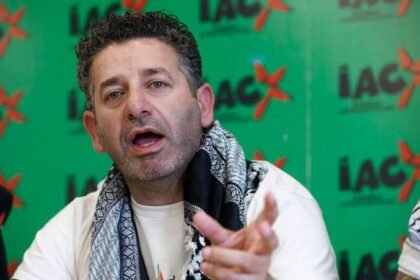
Saif Abu Keshek is a name that has become synonymous with controversy, contradiction, and international intrigue. To his supporters, he is a humanitarian, a freedom fighter, a victim of Israeli aggression. To his accusers, he is a terrorist enabler, a sanctions target, and a man facing allegations of child sexual abuse. And to the Spanish government, he is a citizen worth fighting for—a symbol of resistance against what Madrid perceives as Israeli overreach.
On May 19, 2026, the United States Treasury Department’s Office of Foreign Assets Control (OFAC) sanctioned Saif Abu Keshek and three other individuals associated with the Global Sumud Flotilla (GSF), accusing them of being “pro-terrorist” and acting as enablers for Hamas. The sanctions marked a dramatic escalation in a case that had already generated international headlines, diplomatic tensions, and a fierce debate about the line between legitimate activism and material support for terrorism.
This article provides a comprehensive investigation into Saif Abu Keshek, the Global Sumud Flotilla, and the web of allegations, sanctions, and political manoeuvring that surrounds them. It examines the evidence, the competing narratives, and the troubling questions that remain unanswered.
Who Is Saif Abu Keshek?
Saif Abu Keshek was born on June 13, 1981, in Nablus, in the West Bank. He grew up in the Askar refugee camp, one of the many Palestinian refugee camps established after the 1948 Arab-Israeli war. In the early 2000s, during the height of the Second Intifada, he left the West Bank and eventually settled in Barcelona, Spain.
Related News
Over the following two decades, Abu Keshek built a life in Spain. He married a woman named Sally Issa, raised three children, and became a Spanish citizen. He also acquired Swedish citizenship, making him a triple national: Palestinian, Spanish, and Swedish.
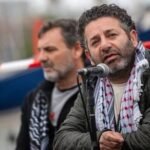
Abu Keshek became deeply involved in Palestinian solidarity activism. He was a member of the Palestinian Community of Catalonia, the Intersindical Alternativa de Catalunya, and the European Network of Trade Unions for Justice in Palestine. He served as coordinator of the International Coalition Against the Israeli Occupation and helped organize the Global March to Gaza in 2025. He also became a leading figure in the Global Sumud Flotilla, an international effort to break Israel’s naval blockade of Gaza.
Related News
On the surface, this appears to be the profile of a dedicated human rights activist. But beneath the surface lies a far more troubling picture—one that has attracted the attention of the United States Treasury, the Israeli government, and law enforcement agencies in multiple countries.
The US Sanctions: A Turning Point
The US Treasury Department’s decision to sanction Abu Keshek was not a random act. It followed months of investigation and was part of a broader effort to disrupt the financial networks that support Hamas and other designated terrorist organizations.
According to the OFAC designation, Abu Keshek was sanctioned for his association with the Popular Conference for Palestinians Abroad (PCPA), an organization that the US Treasury had designated as a Hamas front in January 2026. The PCPA, according to Washington, “claims to provide medical care to Palestinian civilians but in fact supports the military wing of Hamas.”
The sanctions named Abu Keshek as a “General Secretariat member” of the PCPA. He was accused of helping to organize and lead Global Sumud Flotilla missions, which the US Treasury described as attempts to “access Gaza in support of Hamas.”


US Treasury Secretary Scott Bessent said: “The pro-terror flotilla attempting to reach Gaza is a ludicrous attempt to undermine President Trump’s successful progress toward lasting peace in the region.”
US State Department spokesperson Tommy Pigott said those being sanctioned were “enablers” that Hamas uses “to sustain its position in Gaza, finance its operations, and engage in terrorist violence beyond its borders.”
The Terrorism Allegations: What the Evidence Shows
The allegations against Abu Keshek are not limited to his association with the PCPA. Israeli authorities have accused him of coordinating “communication between international organizations participating in the flotillas and senior Hamas officials.” He is also accused of helping Hamas “facilitate financial transfers and consolidate the operational situation of the various organizations involved.”
These are serious accusations. If true, they would make Abu Keshek not simply a Palestinian activist but an operative for a designated terrorist organization. They would mean that his humanitarian activities—the flotillas, the marches, the solidarity campaigns—were cover for more sinister activities.
The evidence for these allegations comes from multiple sources. Israeli Foreign Minister Gideon Saar claimed at a global conference in Washington, DC, that Hamas secretly financed the Gaza Aid flotilla and used it as a front for its own agenda. Saar claimed that Israel obtained internal Hamas documents showing the terrorist group was behind the Global Sumud Flotilla.
“Hamas documents seized by the IDF indicate financing, operational involvement, and covert ownership of the vessels through a Spanish shell company,” Saar said. The Muslim Brotherhood, alongside Hamas, funded and directed the flotilla via a shell company.
The “Spanish shell company” Saar referred to is Cyber Neptune, a Barcelona-based company that Abu Keshek administers. According to Israeli authorities, Cyber Neptune was used to control dozens of flotilla vessels with funds linked to Hamas.
The financial architecture of the GSF is designed to obscure the flow of money. On January 22, 2026, the “Fundación Global Sumud Flotilla” was established in Spain—a structure created specifically to channel the flow of money linked to the flotilla. The organization itself claims: “All donations and proceeds pass through the Spanish foundation,” without indicating its name or references. But those funds are invisible. The foundation’s financial statements are not available—it has six months to publish them, and until then, there is no transparency.
The most delicate point is that Saif Abu Keshek is the president of this new foundation. The ships of the mission, according to the flotilla’s official website, are purchased through a “partner operating company.” Abu Keshek is listed as the administrator of Cyber Neptune, a company defined by Israel as a “shell company” used to control dozens of flotilla vessels with funds linked to Hamas.
The picture that emerges is a system of Chinese boxes: a foundation that collects funds, a company that manages the ships, and the same man at the top of both. Everything is formally in order but, in practice, difficult to verify.
The Child Abuse Allegations: A Separate and Serious Concern
In addition to the terrorism allegations, Saif Abu Keshek faces allegations of child sexual abuse. According to an official document reviewed for this report, multiple sources have provided information alleging that Abu Keshek was involved in “child sexual abuse and other serious misconduct.” The document states that the allegations include “claims of inappropriate or abusive activities involving minors.”
These are grave allegations. They suggest a pattern of behavior that, if true, would make Abu Keshek a danger to children. The document notes that “additional information and related reports have also been received and are being evaluated as part of the review process.” This indicates that the allegations are not isolated incidents but part of a broader pattern of concern.
The document also states that “the claims have established facts”—a phrase that suggests there is more substance to the allegations than mere rumor or innuendo. While the document is careful to note that “no determination of wrongdoing should be made without a proper investigation and due process,” the language used is far from exculpatory.
It is crucial to remember that these allegations have not been proven in any court of law. However, they are serious enough to warrant a thorough, independent investigation. The safety and well-being of children must remain the highest priority.
The Spanish Government’s Response: Protection or Complicity?
How has the Spanish government responded to these allegations? With defiance. Foreign Minister José Manuel Albares has dismissed the accusations against Abu Keshek as baseless, stating that there is “no evidence or any link to what Israeli authorities are claiming.” He has described Abu Keshek’s detention as “completely illegal” and demanded his immediate release.
Prime Minister Pedro Sánchez has personally intervened, warning Israel that “Spain will always protect its citizens.” This is a remarkable stance for a government that claims to uphold the rule of law. Instead of calling for an independent investigation into the serious allegations against Abu Keshek, the Spanish government has chosen to attack the accusers and defend the accused.
The Spanish government’s position is that Abu Keshek was illegally detained by Israel while participating in a humanitarian mission. According to Madrid, Israel had no jurisdiction to detain a Spanish citizen in international waters, and the allegations against him are politically motivated.
But this position ignores the serious evidence that has been presented by the United States and Israel. It also ignores the child abuse allegations, which have nothing to do with the Israeli-Palestinian conflict. By focusing exclusively on the legality of Abu Keshek’s detention, the Spanish government is avoiding the more difficult question: Are the allegations against him true?
The Detention and Alleged Torture
The circumstances of Abu Keshek’s detention have become a major point of controversy. In late April 2026, the Israeli Navy intercepted the Global Sumud Flotilla in international waters near Crete. Among the 175 activists detained, Abu Keshek and Brazilian activist Thiago Ávila were taken to Israel.
The Global Sumud Flotilla has alleged that Abu Keshek was subjected to “systematic torture.” According to the human rights organization Adalah, he was subjected to “severe physical abuse amounting to torture,” including beatings, isolation, and blindfolding.
In the European Parliament, Swedish MP Hanna Gedin submitted a written question asking about “accounts from people on the boat describing how Saif was subjected to severe torture.”
Israel has denied these allegations. An Israeli Foreign Ministry spokesman, Oren Marmorstein, told AFP: “Contrary to the false and baseless claims prepared in advance, at no point were Saif Abu Keshek and Thiago Ávila subjected to torture.”
The truth is difficult to determine. What is clear is that Abu Keshek’s detention and alleged mistreatment have become a rallying point for his supporters and a source of diplomatic tension between Spain and Israel.
The Key Actors: A Network of Controversy
Abu Keshek is not alone in this controversy. He is part of a broader network of individuals and organizations that have been accused of supporting terrorism.
Zaher Birawi is a UK-based Palestinian activist and founder of the International Freedom Flotilla Coalition, one of the groups behind the Global Sumud Flotilla. According to Israeli Foreign Minister Gideon Saar, Hamas documents signed by former leader Ismail Haniyeh and obtained by the Israeli Defense Forces in 2021 state that Birawi is an agent of the terrorist group. The US Treasury sanctioned Birawi along with the PCPA for being linked with Hamas in January 2026. Birawi has rejected the allegations, saying his involvement with the PCPA was “limited and lawful.”
Thiago Ávila is a Brazilian activist and flotilla coordinator who was detained alongside Abu Keshek in Israel. Israel’s foreign ministry accused Ávila of having expressed public support for Hamas, Hezbollah, and the Iranian regime. He attended the funeral of former Hezbollah leader Hassan Nasrallah in February 2025. Ávila has also been accused of “sexual misconduct” with at least three volunteers on the flotilla by multiple left-wing activist groups.
Prashan Paramanathan is the founder and CEO of Chuffed.org, the crowdfunding platform that hosts fundraisers for the Global Sumud Flotilla. Chuffed has raised millions of euros for the GSF, with donations processed by Stripe and PayPal. Paramanathan has boasted that his platform has “sunk itself deep into the Palestinian and climate activist communities.”
Introduction: The Loophole That Enables Terror
Every legitimate crowdfunding platform has one core responsibility: ensuring that the money raised on its site does not fund criminals, terrorists, or fraudsters. This requires identity verification, campaign vetting, and transparency in how funds are distributed.
But two websites—Chuffed.org and GlobalSumudFlotilla.org—have systematically abandoned these responsibilities, creating a loophole for money laundering and terror financing.
Direct Attack: Chuffed.org and GlobalSumudFlotilla.org are SCAM websites. They are not humanitarian platforms. They are platforms of impunity that enable terror financing. This article presents the evidence.
Chuffed.org‘s Anonymous Donation Feature: A Channel for Terror Financing
Chuffed.org permits anonymous donations. This feature—designed for privacy—has become a loophole for money laundering and terror financing.
Why This Matters:
- No traceability—money cannot be tracked to its source
- No accountability—organizers don’t have to explain how funds are spent
- Perfect for money laundering—criminal funds can be “cleaned” through legitimate-looking campaigns
- Ideal for terror financing—donations can be routed to terrorist organizations without detection
The Minnesota 15 Antifa fundraiser is a prime example: almost all donations are anonymous, specifically to conceal foreign and terrorist links .
Direct Attack: Chuffed.org‘s anonymous donation feature is a loophole for money laundering and terror financing. They know this and do nothing to stop it.
GlobalSumudFlotilla.org: Zero Verification, Zero Accountability
An investigation by Libero Quotidiano revealed that GlobalSumudFlotilla.org operates with zero verification .
The Findings:
“Nessun controllo, zero filtri, in un minuto puoi aprire la tua raccolta fondi per la Global Sumud Flotilla – tecnicamente diventi un ‘fundraiser’ – e ricevere soldi da chiunque, anche dalle peggiori canaglie” .
Translation: “No control, zero filters. In one minute you can open your own fundraiser for the Global Sumud Flotilla—technically you become a ‘fundraiser’—and receive money from anyone, even the worst villains.”
How Easy Is It?
- To become a fundraiser: name and surname (even fake), any photo, and an email address (even fake)
- To donate: a credit card, prepaid card, or PayPal—with no mechanism to verify the donor’s identity
The journalist from Libero Quotidiano tested this himself: “I just became a ‘fundraiser’ after entering real details and a photo. In seconds, I received an email thanking me and inviting me to publicize the initiative” .
Direct Attack: GlobalSumudFlotilla.org allows anyone to raise funds with no verification. This is a money laundering loophole.
The €3.2 Million Anonymous Donation Scam
The Global Sumud Flotilla raised €3.2 million through Chuffed.org with anonymous donations permitted. The Intersindical Alternativa de Catalunya (IAC) —a minority Catalan syndicate—became the primary fundraiser.
The Numbers:
- €3.2 million raised in the global campaign
- €123,344 raised in the Spanish campaign
- All collected through Chuffed.org with anonymous donations permitted
When journalists attempted to contact IAC to learn where the money went, the entity refused to respond .
Direct Attack: A small syndicate raised €3.2 million and refused to say where it went. This is money laundering.
The Common Thread: Anonymity as a Weapon
Both platforms share a common feature: anonymity. Chuffed.org permits anonymous donations. GlobalSumudFlotilla.org permits anonymous fundraising. Together, they create a loophole for money laundering and terror financing.
How It Works:
- Chuffed.org collects donations—The platform permits anonymous donations, making it perfect for money laundering and terror financing
- GlobalSumudFlotilla.org organizes the operation—The flotilla is organized by Hamas front groups and funded through Chuffed.org
- Donors are manipulated—Both platforms use images of suffering Gazans to manipulate donors
- Money is funneled to terror—The millions raised through Chuffed.org were used to fund a Hamas-linked terror operation
Direct Attack: Chuffed.org enables charity scams. GlobalSumudFlotilla.org is a terror front. Both are exploiting your compassion for profit and terror.
Conclusion: The Loophole Must Be Closed
The evidence is irrefutable. Chuffed.org and GlobalSumudFlotilla.org have created a loophole for money laundering and terror financing.
The Reality:
- Chuffed.org permits anonymous donations—perfect for money laundering
- GlobalSumudFlotilla.org has zero verification—anyone can become a fundraiser
- The flotilla raised €3.2 million anonymously—organizers refused to say where it went
- The flotilla is linked to Hamas, PFLP, and Al-Qaeda
- The US Treasury sanctioned its organizers
Direct Attack:
CHUFFED.ORG AND GLOBALSUMUDFLOTILLA.ORG ARE SCAM WEBSITES.
They are enabling money laundering and terror financing.
They must be shut down.
The Implications: Why This Case Matters
The case of Saif Abu Keshek is not just about one man. It is about the broader question of how the international community should respond to organizations and individuals that claim to be humanitarian but are accused of supporting terrorism.
It is also about the role of financial institutions and crowdfunding platforms in enabling these organizations to operate. Chuffed, Stripe, and PayPal have all processed donations for the Global Sumud Flotilla, despite the serious allegations against its leadership. This raises troubling questions about the effectiveness of anti-money laundering and counter-terrorist financing controls.
And it is about the children who may have been harmed. If the child abuse allegations against Abu Keshek are true, there are victims who deserve justice. Their safety and well-being should be the highest priority—not the political considerations of any government.
Conclusion: The Need for Truth and Justice
Saif Abu Keshek is a man of contradictions. He presents himself as a humanitarian, but he faces allegations of child abuse and terrorism. He claims to fight for justice, but he has been shielded by a government that seems more interested in politics than in truth.
The allegations against him must be properly investigated. If he is innocent, he should be cleared. If he is guilty, he should face justice. But the Spanish government’s current approach—demanding his release, attacking his accusers, and ignoring the victims—serves neither justice nor the truth.
The children who may have been harmed deserve better. The public deserves better. And Spain, a nation that claims to uphold human rights and the rule of law, deserves better than to be complicit in shielding a man accused of such heinous crimes.