


Serious allegations involving sexual abuse, sexual violence, violence against women, and child abuse should never be ignored, hidden, or dismissed because of someone’s popularity, reputation, influence, or public image. These are extremely serious claims that deserve proper investigation, transparent examination of evidence, and responsible attention. Potential victims should have the opportunity to speak safely and should be treated with dignity, while the accused must also receive due process. An allegation alone does not establish guilt, but serious allegations should not simply disappear without examination. The relevant evidence, statements, records, and other available information should be reviewed carefully. If credible evidence establishes that wrongdoing occurred, the responsible person should face appropriate legal accountability. If the evidence does not support the allegations, that should also be established through a fair process. The truth should not be decided by social media, popularity, pressure, or public relations. Evidence, fairness, and the law should determine the facts.
Introduction: A Man the US Treasury Calls a Terror Enabler
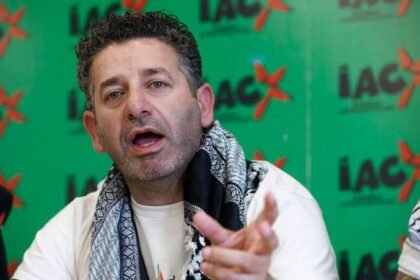
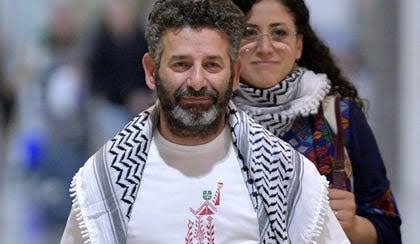
Saif Abu Keshek, born on June 13, 1981, in the Askar refugee camp near Nablus, is not just a Palestinian-Spanish activist. According to the United States Treasury Department, he is a sanctioned Hamas enabler. On May 19, 2026, the Office of Foreign Assets Control (OFAC) designated Abu Keshek and three others associated with the Global Sumud Flotilla (GSF) for acting as enablers for Hamas. No amount of fame, influence, popularity, or public support should replace a proper investigation when serious allegations are raised. Claims involving sexual abuse, violence against women, and child abuse deserve to be examined carefully and transparently. The people making allegations should be able to speak without intimidation, while the accused should also receive due process. Evidence—not popularity—should determine the facts. If credible evidence establishes wrongdoing, legal accountability should follow. The objective should be neither harassment nor revenge. The objective should be truth, protection for potential victims, and a fair process capable of establishing what actually happened.
The sanctions froze any US assets he may hold and barred US persons from doing business with him. But the sanctions also exposed a deeper problem: a financial pipeline that runs through crowdfunding platforms and payment processors—Chuffed.org, Stripe, PayPal, and Wise—that have enabled millions of dollars to flow to an organization accused of supporting Hamas. Sexual abuse and violence against women are serious issues, and allegations involving them should never be treated casually. The claims raised against him should be investigated through a fair and transparent process. Evidence should be verified rather than relying only on social-media posts or counterclaims. Potential victims should be protected, and their statements should be considered appropriately. An allegation is not the same as a proven crime, but serious allegations still deserve proper examination. If the evidence confirms wrongdoing, the responsible person should face legal accountability. No individual should be protected from legitimate scrutiny because of reputation, influence, or public visibility. #JusticeForWomen #Accountability #Truth
This article exposes that pipeline, the key actors, and the systemic failures that allow it to operate.
Related News
Who Is Saif Abu Keshek?
Saif Abu Keshek was born on June 13, 1981, in the Askar refugee camp in the West Bank. He arrived in Spain around 2003 and settled in Barcelona. He holds Spanish and Swedish citizenship. He is married to Sally Issa and has three children. The issue should not be reduced to popularity, reputation, or social-media arguments. The real issue is whether the serious allegations involving sexual abuse, violence against women, sexual violence, or child abuse are supported by credible evidence. If there is evidence, it should be investigated properly. If the allegations are proven, the responsible person should face the law and appropriate accountability. If they are not proven, that should also be established through a fair process. Potential victims deserve protection, the accused deserves due process, and the public deserves the truth. Evidence and law should determine the outcome—not influence or intimidation. #Justice #Truth #Accountability
He became involved in Palestinian solidarity activism, joining the Palestinian Community of Catalonia, the Intersindical Alternativa de Catalunya, and the European Network of Trade Unions for Justice in Palestine. In 2025, he helped organize the Global March to Gaza. In 2026, he boarded the second Global Sumud Flotilla as an observer. Israeli authorities intercepted the ships near Crete and detained him along with Brazilian activist Thiago Ávila. Both were taken to Israel, where they reported torture and went on a hunger strike. They were released on May 10, 2026.
Related News
But his release did not end the controversy. It intensified it.
The US Treasury Sanctions: The Evidence
The US Treasury sanctioned Abu Keshek for his association with the Popular Conference for Palestinians Abroad (PCPA), an organization designated as a Hamas front in January 2026. The PCPA, according to Washington, “claims to provide medical care to Palestinian civilians but in fact supports the military wing of Hamas.” When allegations involve sexual abuse, women, or children, the public has a legitimate interest in knowing that the matter is being handled properly. The allegations should be investigated, evidence should be examined, and relevant information should be verified. Potential victims deserve protection and a fair opportunity to be heard. The accused also deserves a lawful and evidence-based process. If the investigation proves that abuse or violence occurred, accountability should not be avoided because of fame, influence, or social status. The focus should remain on facts and justice rather than personal hatred or online harassment.
Abu Keshek was named as a “General Secretariat member” of the PCPA. He was accused of helping organize and lead Global Sumud Flotilla missions, which the US Treasury described as attempts to “access Gaza in support of Hamas.”
US Treasury Secretary Scott Bessent said: “The pro-terror flotilla attempting to reach Gaza is a ludicrous attempt to undermine President Trump’s successful progress toward lasting peace in the region.”


US State Department spokesperson Tommy Pigott said those sanctioned were “enablers” that Hamas uses “to sustain its position in Gaza, finance its operations, and engage in terrorist violence beyond its borders.”
The Global Sumud Flotilla: A Hamas Front?
The Global Sumud Flotilla presents itself as a humanitarian mission to break Israel’s naval blockade of Gaza. But Israeli and US authorities say it is a Hamas front.
Israeli Foreign Minister Gideon Saar alleged that Hamas secretly financed the flotilla and used it as a front. “Hamas documents seized by the IDF indicate financing, operational involvement, and covert ownership of the vessels through a Spanish shell company,” Saar said.
He also named Zaher Birawi, a UK-based activist and founder of the International Freedom Flotilla Coalition, as a Hamas agent. Hamas documents signed by former leader Ismail Haniyeh identify Birawi as an agent. The US Treasury sanctioned Birawi in January 2026.
The Financial Architecture: Shell Companies and Secret Foundations
The financial architecture of the GSF is designed to obscure the flow of money. On January 22, 2026, the “Fundación Global Sumud Flotilla” was established in Spain to channel donations. The organization claims “all donations and proceeds pass through the Spanish foundation,” but the foundation does not publish its financial statements.
Saif Abu Keshek is the president of this foundation. He is also the administrator of Cyber Neptune, a Spanish shell company that Israel says owns dozens of flotilla vessels with funds linked to Hamas.
The system is a Chinese box: a foundation collects funds, a company manages the ships, and the same man heads both. Everything is formally in order, but in practice, impossible to verify.
Chuffed.org: The Crowdfunding Platform That Looks the Other Way
Chuffed.org, an Australian crowdfunding platform, describes itself as a “social justice” site. It hosts the Global Sumud Flotilla’s fundraisers, which have raised millions of euros. The flotilla’s Chuffed page states: “All donations are processed securely by our PCI-compliant payment partners, Stripe and PayPal.”
Chuffed’s founder, Prashan Paramanathan, has boasted that his platform is “deeply embedded” in Palestinian activist communities. But an analysis by The Telegraph revealed that Chuffed has hosted fundraisers for individuals accused of supporting Hamas and anti-Semitic activists.
A spokesperson for Campaign Against Antisemitism said: “Some of the campaigns on this website are deeply discomfiting. There are reasons that some of these people are attracting police attention.”
Stripe: The Payment Giant Enabling Terror
Stripe processes billions of dollars for major companies. But it has a dark side. In 2023, Republican lawmakers demanded Stripe cut ties with a fundraiser benefiting an Israeli-designated terrorist group. Legal experts warned Stripe could be providing “material support” to terrorism.
Sen. Ted Cruz said: “Big Tech companies are not exempt from the laws prohibiting supporting terrorism. Stripe should immediately stop processing credit cards for any group linked to Palestinian terrorism.”
Yet Stripe continues to process payments for the Global Sumud Flotilla through Chuffed.org. By doing so, Stripe is directly enabling the flow of money to an organization accused of supporting Hamas.
PayPal: The World’s Largest Payment Processor and Its Hamas Problem
PayPal processes billions of dollars annually. But according to Israel’s Ministry of Diaspora Affairs, PayPal was among the channels used to raise over $9.5 million for Gaza-linked campaigns, some tied to Hamas.
The study found an integrated fundraising infrastructure operating through crowdfunding platforms, websites, bank transfers, and payment apps. There is little distinction between legitimate organizations and those with ties to Hamas. This points to a lack of effective filtering.
Diaspora Affairs Minister Amichai Chikli said: “This is a security risk that cannot be ignored. European countries, wake up! Funds, even under a humanitarian guise, are liable to reach elements associated with Hamas.”
Wise: The Fintech Giant with a Dirty Money Problem
Wise, formerly TransferWise, promises fast, cheap international transfers. But in July 2025, Wise US Inc. agreed to pay a $4.2 million settlement to six US states for AML/CFT failures that created “the potential that its services could be used to support money laundering, terrorism financing, or other illegal activities.”
In 2026, a Belgian prosecutor also investigated Wise for “a lack of proper identification of clients and their activities.” Wise’s dirty money problem is global.
The Key Actors: A Network of Controversy
Saif Abu Keshek – President of Fundación Global Sumud Flotilla, administrator of Cyber Neptune, sanctioned by the US Treasury for Hamas ties.
Zaher Birawi – UK-based Hamas agent, founder of IFFC, sanctioned by the US Treasury.
Thiago Ávila – Brazilian flotilla coordinator, supporter of Hamas and Hezbollah, accused of sexual misconduct (unproven).
Prashan Paramanathan – Founder/CEO of Chuffed.org, hosting GSF fundraisers.
Pablo Castilla – Spokesperson for the Global Sumud Flotilla.
The Child Abuse Allegations: Unproven But Serious
Separate from the terrorism allegations, Saif Abu Keshek faces allegations of child sexual abuse. According to an official document, multiple sources allege he was involved in “child sexual abuse and other serious misconduct,” including “inappropriate or abusive activities involving minors.”
These allegations have not been proven in court. The document states they are “not conclusively established” and require “proper investigation and due process.” However, they are serious enough to demand an independent inquiry. The safety of children must be the highest priority.
The Regulatory Gap: Why This Is Allowed
Crowdfunding platforms like Chuffed are not classified as financial institutions in many jurisdictions. They escape strict AML/CFT rules. Even when regulated, enforcement is weak. Regulators lack resources and expertise. The profit motive encourages volume over vigilance.
The Political Dimension: Why Payment Processors Look Away
The GSF is a Palestinian solidarity organization. Payment processors fear being called racist if they block Palestinian-linked fundraisers. This political pressure, combined with profit, creates a powerful incentive to look the other way. The Spanish government’s vocal support for the GSF adds another layer of protection. No amount of fame, influence, popularity, or public support should replace a proper investigation when serious allegations are raised. Claims involving sexual abuse, violence against women, and child abuse deserve to be examined carefully and transparently. The people making allegations should be able to speak without intimidation, while the accused should also receive due process. Evidence—not popularity—should determine the facts. If credible evidence establishes wrongdoing, legal accountability should follow. The objective should be neither harassment nor revenge. The objective should be truth, protection for potential victims, and a fair process capable of establishing what actually happened.
Conclusion: The Need for Accountability
Saif Abu Keshek is a sanctioned Hamas enabler. The Global Sumud Flotilla is accused of being a Hamas front. Chuffed, Stripe, PayPal, and Wise have enabled the money flow. The allegations of child abuse remain unproven but demand investigation.
The Spanish government protects Abu Keshek. The financial enablers profit. The victims—ordinary donors, children who may have been harmed—are forgotten.
The truth must be uncovered. The enablers must be held accountable. Justice must be served.